



A guide to saving for a house deposit
Published: 21 August 2026
Want to take your first step onto the property ladder? Saving for a deposit is one of the biggest hurdles. This guide explains how much you may need, how long it could take and practical ways to stay on track.
How much deposit do I need to buy a house?
Your deposit is the money you put down upfront, with the rest usually covered by a mortgage. Many buyers need at least 5% of the property price, but a 10% deposit or more may give you access to a wider range of mortgage options and lower monthly repayments. Remember to budget for other upfront costs too, including legal fees, home surveys and moving expenses. For the bigger picture, this existing guide explains the wider costs of buying a home.
What is the average deposit for a house in the UK?
There’s no fixed deposit amount for every buyer. It depends on the property price and the mortgage deal you’re aiming for. Official UK House Price Index data showed the average UK property price was £271,295 as of May 2026. Even a 5% deposit can therefore be a substantial sum.
- 5% deposit on a £300,000 home = £15,000
- 10% deposit on a £300,000 home = £30,000
- 15% deposit on a £300,000 home = £45,000
For a more realistic target, start with average prices in the area you want to buy. This graphic (using Official UK House Price Index data) shows average house prices across ten UK areas.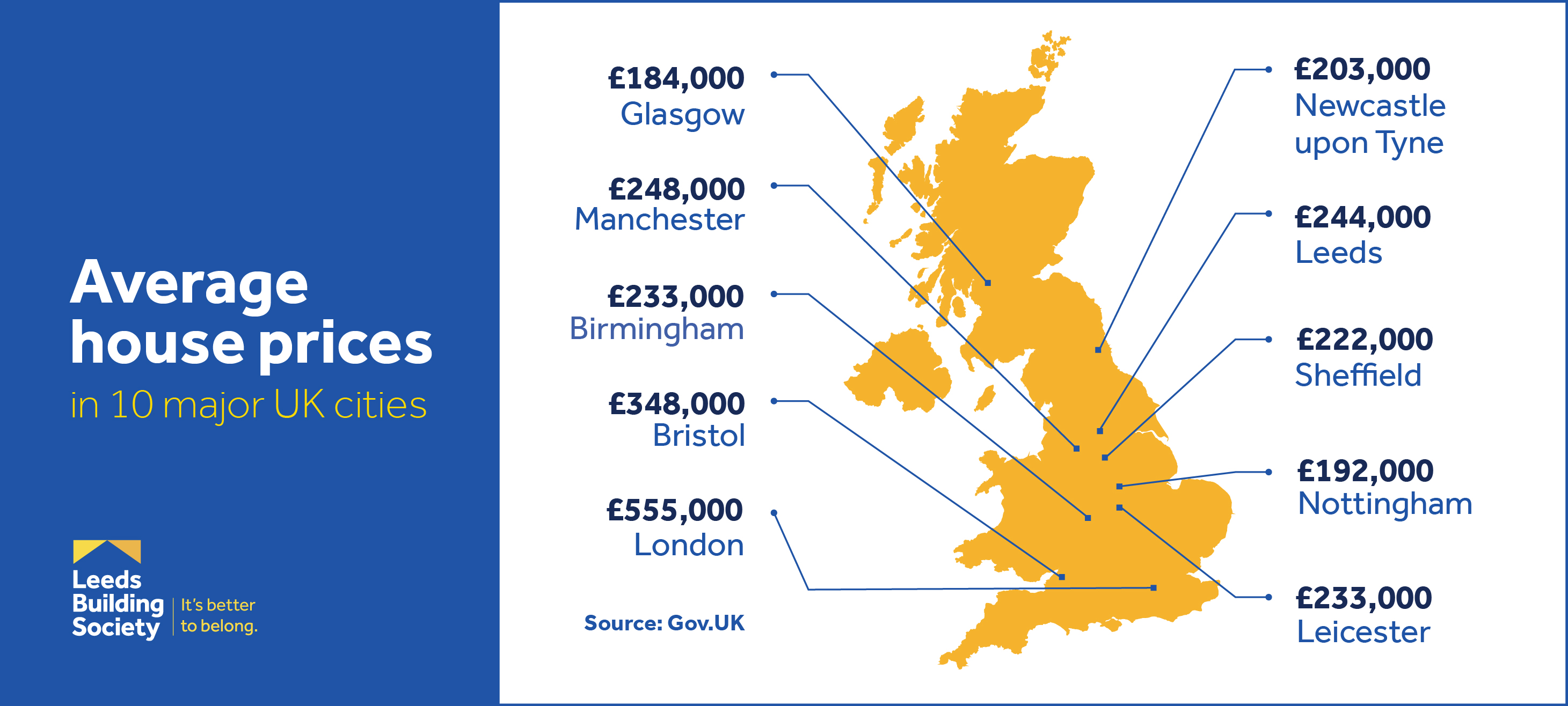
The Office for National Statistics official housing prices in your area tool can also help you compare local, regional and national prices.
What is the average deposit for a first time buyer?
For first-time buyers, the deposit challenge often sits alongside rent, bills and rising living costs. Typical first homes are often smaller properties, such as one to three-bedroom flats or terraced homes, but prices still vary widely by region. Many buyers start with the minimum deposit they need, then increase it if they can.
Your target should reflect your income, regular bills and how quickly you can realistically save. Some people save alone over a longer period, while others save jointly or receive help from family. If you’re looking for a dedicated place to save your deposit, our Home Deposit Saver is designed to help savers work towards buying their first or next home. You can earn a competitive rate of interest, and you could get a £500 bonus to boost your savings if you get a residential mortgage offer from us to buy your home. Don’t forget to check your eligibility before applying.
How long does it take to save for a house deposit?
How long it takes depends on your target, how much you can save each month and whether you’re saving alone or with someone else. Rent, bills, childcare costs and house price changes can all affect your timeline. Using the average UK property price of £271,295, here are two example deposit targets and monthly saving scenarios:
- 5% deposit target: £13,565. Saving £250 a month would take around 4 years and 7 months.
- 10% deposit target: £27,130. Saving £500 a month would take around 4 years and 7 months.
And if you save in a savings account you’ll also earn interest as well.
Everyone’s situation is different, so a savings calculator can help you work out how much you might save over time based on your own deposit goal and monthly contributions.
Support on your savings journey
“Saving for a home deposit can feel like a big challenge, especially when you’re juggling everyday expenses. But by opening a product like our Home Deposit Saver, it could help you achieve your savings target. Saving regularly and taking small steps over time can help turn home ownership into something you can work towards with confidence.”
Catherine Wray, Senior Product and Pricing Manager
Ways to save for a house deposit
- Set a clear savings goal - choose the type of property you want, check likely prices and work out what a 5%, 10% or more deposit would mean.
- Keep deposit savings separate - a dedicated savings account can make it easier to track progress and avoid dipping into your deposit. Our Home Deposit Saver is designed for savers building towards buying their first or next home.
- Save regularly if you can - setting up a standing order shortly after payday can help make saving feel more routine.
- Cut costs where realistic - small changes to regular spending can add up over time.
- Review your progress regularly - checking in on your goal can help you stay motivated and adjust your plan if house prices, income or expenses change.
How can I save for a house deposit while renting?
Saving while renting can be difficult, especially when rent and household bills take up a large part of your monthly budget. But with a realistic target, regular saving and frequent reviews of what you can afford, it can still be possible.
Whether you’re saving alone, with a partner or alongside rent, breaking your goal into smaller steps can make it feel more manageable. If you’re ready to start, take a look at the Home Deposit Saver and see whether it could help you work towards your deposit goal.
Find out more about our Home Deposit SaverThis article is not advice, and you should seek independent financial or legal advice if needed.